
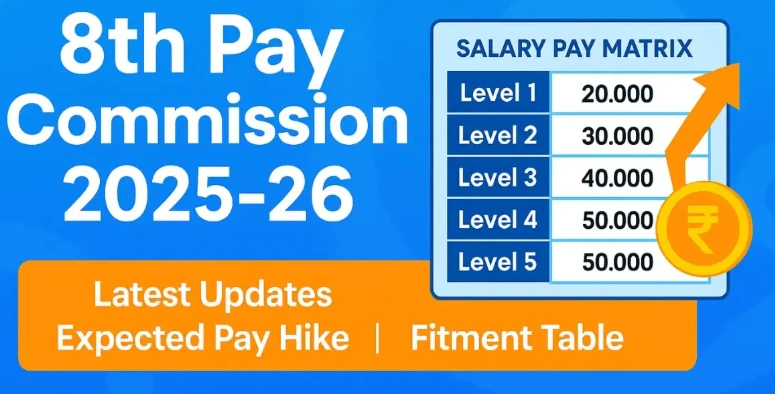
The talk of an 8th Pay Commission salary hike of more than 400% comes from a single proposal — and it’s a demand, not a decision. The figure traces back to the Indian Railway Technical Supervisors’ Association (IRTSA), which has asked the commission to scrap the usual one-size-fits-all approach and apply five different fitment factors across pay levels. For the most senior employees, that structure could in theory more than quadruple basic pay. As of 2026, though, nothing about the fitment factor or revised pay matrix has been finalised; the commission is still in consultations. Here’s what the proposal actually contains, how the maths works, and why the final number is likely to land lower.
What the 400% Proposal Actually Says
Past pay commissions used a single fitment factor for everyone. IRTSA wants to break that pattern and tie a higher multiplier to higher pay levels, arguing the current system squeezes the gap between junior and senior staff — especially technical employees running safety-critical railway operations. Their proposed multipliers, by pay level, are:
| Pay levels | Proposed fitment factor |
| Levels 1–5 | 2.92 |
| Levels 6–8 | 3.50 |
| Levels 9–12 | 3.80 |
| Levels 13–16 | 4.09 |
| Levels 17–18 | 4.38 |
These are IRTSA’s numbers, not approved rates. If applied, the impact at the top would be dramatic: a senior employee on a basic pay of ₹2.5 lakh under Levels 17–18 would see revised basic pay near ₹10.95 lakh at the 4.38 factor. Mid-level staff would feel it too — a ₹45,000 basic under Levels 6–8 would rise to about ₹1.57 lakh at 3.50. That top-end leap is where the “400%” headline comes from.
What a Fitment Factor Is and How It Works
Strip away the jargon and the fitment factor is just a multiplier. Every pay commission uses one to convert old basic pay into new basic pay, with a simple formula:
New basic pay = current basic pay × fitment factor.
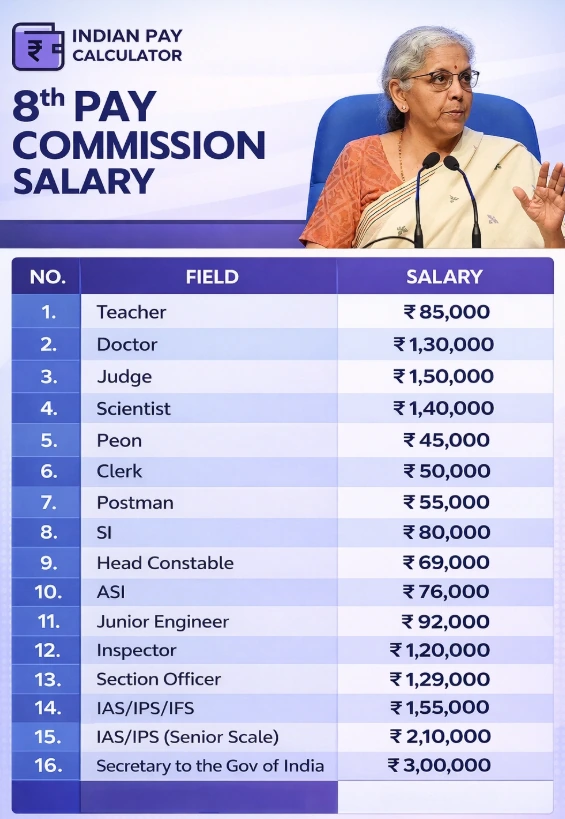
Under the 7th Pay Commission the fitment factor was 2.57. The 8th Pay Commission’s number hasn’t been set, and that single figure matters more than any other in the whole exercise, because it drives not only salaries but pensions, allowances and arrears across every department. Union demands sit well above 2.57: bodies have sought figures around 3.83 and higher, the National Council–Joint Consultative Machinery has pushed for a minimum basic pay of ₹69,000, and Bharatiya Pratiraksha Mazdoor Sangh has reportedly asked for ₹72,000 minimum and a 4.0 factor. The spread of demands is the clearest sign that the headline numbers are opening positions, not settled outcomes.
The Other Demands on the Table
The fitment factor grabs attention, but the broader wishlist is where day-to-day pay is shaped. Alongside the tiered multipliers, IRTSA has asked for a separate pay structure for technical railway staff, faster promotions, annual increments raised to 5%, and the merger of 50% Dearness Allowance into basic pay before revision calculations begin. That DA-merger point is easy to overlook and financially significant — folding DA into basic before applying the multiplier raises the base the factor acts on.
Another proposal gaining traction across unions is revising the “family unit” formula from 3 to 5. The argument is practical: the wage formula was designed decades ago, while many employees today support a spouse, children and ageing parents at once, against rising healthcare, housing and education costs. Changing the assumed household size feeds directly into minimum-pay calculations.
The Pension and OPS Angle
The Old Pension Scheme debate has resurfaced alongside the pay talks. Several unions continue to demand OPS restoration, arguing the National Pension System leaves retirement income exposed to market performance. But even some employee representatives now concede that fully dismantling NPS after years of rollout isn’t realistic. The focus has shifted toward “OPS-like protections” instead of a complete rollback — guaranteed pension mechanisms, DA-linked pension protection, and minimum assured pension structures. That softening matters, because pensions move with the same fitment factor as salaries, so any revision multiplies long-term liabilities too.
Can the Government Actually Afford It?
This is the question that keeps the most generous demands in check. A high fitment factor doesn’t just lift salaries — it raises pensions, allowances, arrears and decades of retirement liabilities at once. The burden also spreads beyond the Centre: many state governments historically revise their own pay after a Central Pay Commission, multiplying the cost across the country.
Union representatives themselves privately accept that not every demand will clear. The backdrop in 2026 is tighter than in past cycles, with persistent inflation concerns, rising pension liabilities and fiscal pressure all weighing on the decision. That combination is why many observers expect a middle path: demands tied to genuine inflation and household realities may get a sympathetic hearing, while the most aggressive multipliers are likely to be moderated. Reading the 4.38 figure as the probable outcome would be a mistake.
Where the 8th Pay Commission Stands Now
The commission was formally constituted on 3 November 2025 and is chaired by Justice (Retd) Ranjana Prakash Desai, with an 18-month window to submit its report. It has entered an intensive consultation phase, holding regional meetings with employee unions, pensioner groups and government bodies across multiple cities. The public feedback window on the MyGov platform has already closed, and the panel continues gathering proposals before drafting recommendations.
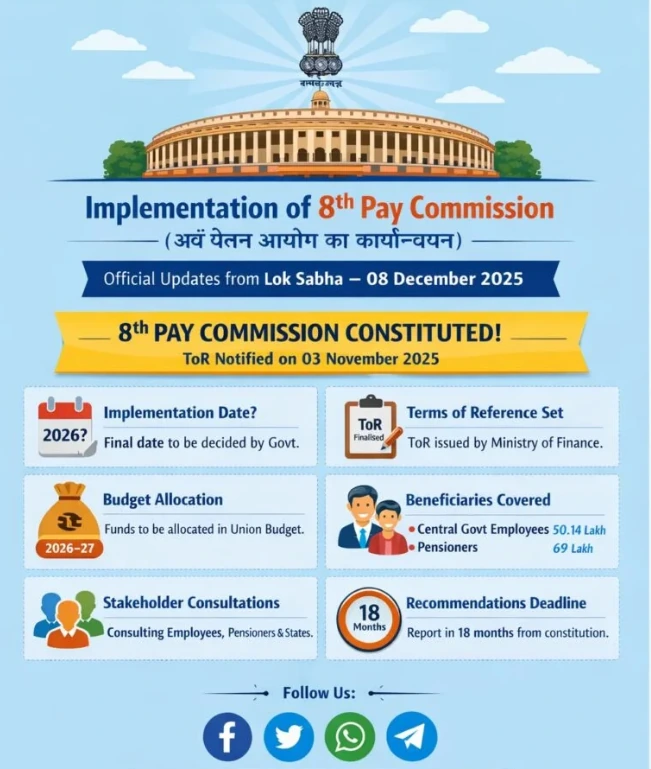
The stakes explain the attention: the outcome is expected to affect more than 1.1 crore beneficiaries — central government employees, pensioners and their families. The exercise continues a tradition running since 1946, with pay commissions typically appointed about once a decade. Crucially, no fitment factor, pay matrix, HRA structure or pension formula has been finalised; every salary projection in circulation, including the 400% figure, is a consultation-stage estimate.
When could the 8th Pay Commission take effect?
Recommendations have been widely discussed with effect from 1 January 2026, but with the report due within 18 months of November 2025, actual implementation timing — and any arrears — depends on when the report is examined and approved.
Is the 400% hike confirmed?
No. It reflects IRTSA’s proposed 4.38 factor for the highest pay levels. It is a demand under consultation, not an approved rate.
What Employees Should Realistically Watch
Treat every viral number as a negotiating position until the commission’s report lands. The figures worth tracking aren’t the headline multipliers but the practical levers — the final fitment factor, whether DA is merged into basic before revision, the minimum basic pay that’s accepted, and any pension protections that survive the fiscal squeeze. Those decide what actually reaches a pay slip. Until the report is published and approved, the honest answer to “how big is the hike” is that it’s still being argued over — so plan around the confirmed structure you have now, not the 400% headline.